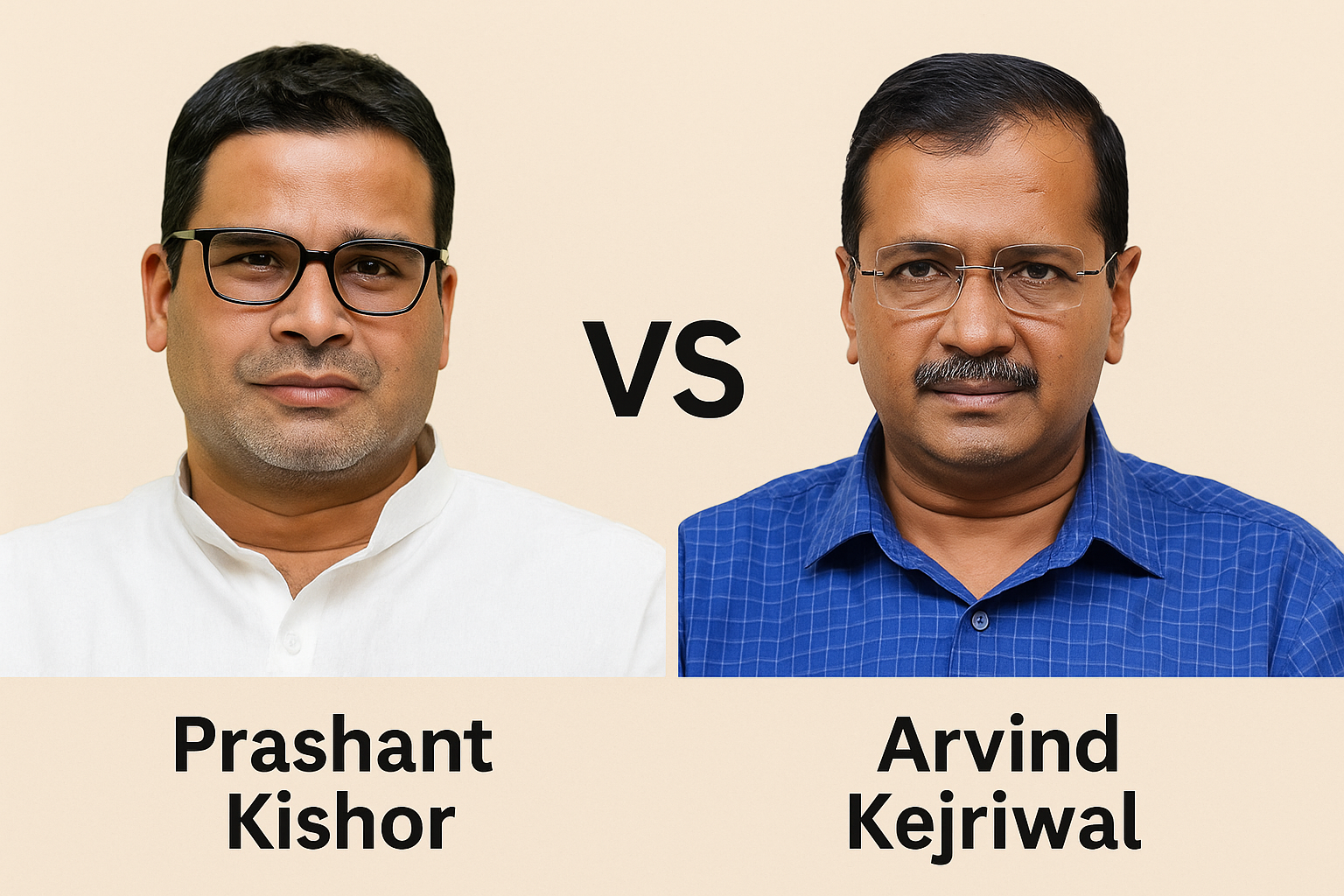
Both Prashant Kishor’s Jan Suraaj and Arvind Kejriwal’s Aam Aadmi Party (AAP) are built around the idea of citizen-centric politics, yet they differ significantly in ideology, approach, organization, and leadership style.
Election strategist; worked with multiple national parties before launching Jan Suraaj
RTI activist; former IRS officer; led the India Against Corruption (IAC) movement
Core idea
Build a citizen-driven, issue-based political model starting from Bihar
Create a clean governance, anti-corruption model starting from Delhi
Style of launch
Grassroots campaign through padyatras and dialogues
Urban protest movement turned into a political party
2️⃣ Ideology & Focus Areas
Jan Suraaj
Aam Aadmi Party
Non-ideological, issue-based movement
Centrist, welfare-driven party
Focuses on employment, education, healthcare, digitalization
Focuses on education, health, electricity, and anti-corruption
Emphasizes bottom-up governance
Emphasizes efficient, citizen-service governance
Aims to reform political culture in Bihar first
Aims to replicate the “Delhi model” across states
3️⃣ Approach to Politics & Power
Jan Suraaj
Aam Aadmi Party
Still in movement phase — not yet a full-fledged political party (as of 2025)
Fully established political party governing Delhi and Punjab
Uses people’s dialogues, padyatras, and ground engagement
Uses electoral campaigning, governance performance, and urban outreach
Avoids direct alliances with traditional parties (for now)
Engages in national-level politics and contests elections across states
More like a citizen movement than a structured party
More like a governing political organization
4️⃣ Leadership Style
Prashant Kishor
Arvind Kejriwal
Strategic, low on populism, high on organization and data
Charismatic, populist communicator, high on welfare politics
Seeks long-term political reform
Seeks immediate governance impact
Focused on grassroots empowerment
Focused on governance delivery
5️⃣ Public Perception & Target Voter Base
Jan Suraaj
Aam Aadmi Party
Appeals to educated youth, rural Bihar voters, and first-time participants
Appeals to urban middle class, lower-income groups, and service-oriented voters
Seen as a new Bihar-centric model
Seen as Delhi’s successful governance model
More movement-focused
More governance-focused
6️⃣ Political Strategy
Jan Suraaj
Aam Aadmi Party
Relies on direct engagement through padyatras and public dialogues
Relies on visible delivery (free electricity, mohalla clinics, schools)
Prioritizes building trust before elections
Prioritizes winning elections to prove governance model
Operates primarily in Bihar
Expanding across multiple states (Delhi, Punjab, Gujarat, Goa, etc.)
🔹 In Summary:
Category
Jan Suraaj (Prashant Kishor)
Aam Aadmi Party (Arvind Kejriwal)
Stage
Movement
Established Party
Base
Rural Bihar
Urban India
Focus
Political reform & participation
Governance & service delivery
Method
Dialogue, padyatra, citizen outreach
Elections, governance, welfare delivery
Vision
Build politics from the bottom up
Deliver governance from the top down
✳️ Conclusion:
While Aam Aadmi Party evolved from activism to power through strong welfare delivery, Jan Suraaj is still laying its foundation as a citizen-driven, bottom-up reform movement. Both share the goal of clean, accountable politics — but differ in scale, structure, and strategy.
Kejriwal’s AAP → Governance-first revolution.
Prashant Kishor’s Jan Suraaj → Political-culture revolution.
best website